
There’s a waiting room at our intensive therapy clinic about an hour and a half from home.
If you’ve never been to one, it’s exactly what it sounds like — a room full of parents who didn’t plan on being there. Parents who are tired, hopeful, grieving, grateful, and everything in between, sometimes all in the same hour.
I’ve sat in that waiting room more times than I can count.
But last week, something happened in that room that I have to tell you about.
Three years ago, we met a young mom during one of our annual intensives. Her baby was just starting her first program. And when I looked at her, I recognized everything on her face.
The overwhelm.
The grief.
The quiet question of — is this really my life now?
She didn’t say all of that out loud. She didn’t have to.
Because I had sat in that exact same feeling just a few years before her.
I was 25. A brand new mom. And my baby couldn’t do the things babies were supposed to do.
I remember thinking my life as I had imagined it was simply… over.
I didn’t know yet what I know now.
So I sat with her that day and I shared a little of what I had learned — that the life you didn’t plan can become the life you are most grateful for. That joy doesn’t disappear when hard things arrive. That your child will surprise you in ways that will bring you to your knees.
If you’ve never read my letter to moms walking through that early season, I want you to have it.
👉 [A Letter to the Mama Who Just Got Hard News]
Fast forward to last week.
Same clinic. Same waiting room.
And there she was.
Her daughter — three years older now, stronger, thriving. And this mama looked at me with tears in her eyes and said —
“I just want you to know how much you encouraged me. We have a wonderful life. You were completely right.”
All I could think was — thank you, Lord.
This is exactly what I was made to do.
This.
Showing up for moms in the waiting room. Telling them the truth. That it gets better. That life will be good again. That their child — your child — is so much more than a diagnosis.
Which brings me to what I really want you to know about Jax.
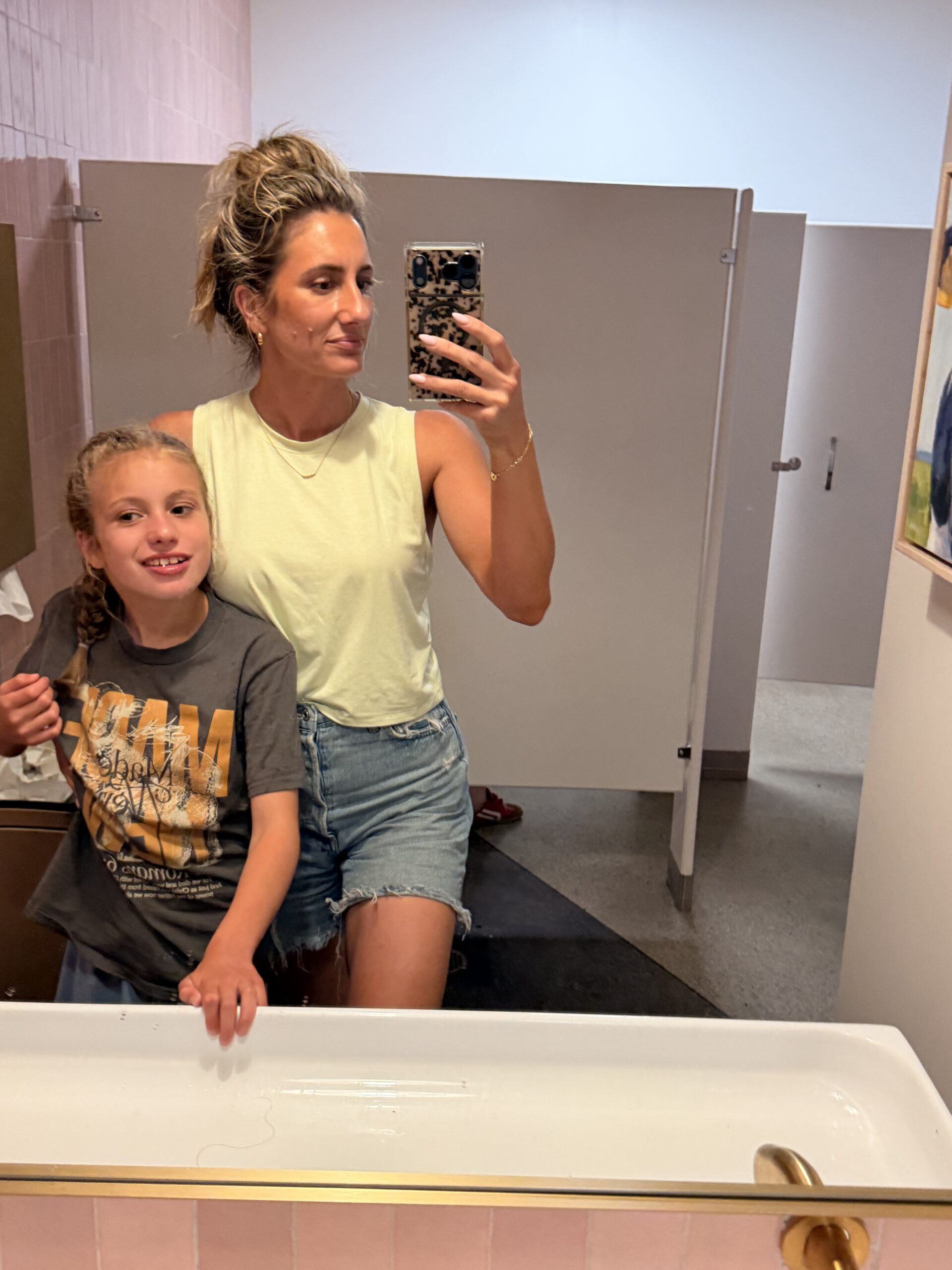
Because whether you know her personally, follow along here, or you simply want to understand the disability world a little better — I want this to help you.
What you see on the outside is not a reflection of what’s happening on the inside.
Jax struggles to walk, talk, and eat.
Not because she isn’t smart.
Not because she doesn’t understand.
But because Cerebral Palsy affects motor function — the brain’s ability to coordinate movement. Her body doesn’t always cooperate with what her mind wants to do.
She is all there.
She hears everything.
She understands everything.
I can’t tell you how many times I’ve found myself saying — oh, she knows exactly what you’re saying.
And one of the things that tips people off in the wrong direction is the drooling. We see drooling in babies, and our brains make an automatic connection. But Jax isn’t a baby. She’s a young girl with a sharp mind, a wicked sense of humor, and opinions about everything.
How do I know?
Because when she was little, she never wanted to watch cartoons. Never. She only wanted to watch real people. Fuller House was one of her favorites. And I will never forget the moment I heard her genuinely laugh — not at slapstick, not at something obvious — but at a joke that required real social understanding.
She got it before I even processed it.
She always gets it.
Talk to her. Not about her.
This is one of the most important things I can share with you.
When you meet Jax — or anyone who is nonverbal — please talk directly to them.
Not to me.
Not to their caregiver.
Not to whoever in the room has words coming out of their mouth.
Look them in the eyes.
Speak to them.
They hear you.
Maybe I’ll be the one who responds. Maybe her caregiver will interpret or answer on her behalf. That’s okay. But keep your eyes on her. Keep your words directed at her. Don’t default to the person who can speak. Default to the person you’re actually talking to.
It’s one of the simplest gifts you can give someone who lives in a body that makes the world overlook them.
Let her struggle.
I know. It’s hard to watch.
Every instinct in you — and honestly, in me too — wants to jump in and fix it. To make it easier. To spare her the effort.
But I have learned that the best thing I can do for Jax is get out of her way.
Because of that, she has grown. She has developed independence that her early prognosis never promised us. She does things every single day that take her ten or fifteen times longer than they would take you or me.
And she does them.
And when she does — the look on her face tells you everything.
She is proud.
She is confident.
She wants to keep going.
So if you see her working toward something, you don’t have to look away. You don’t have to pretend not to notice. You can absolutely offer help.
But you can also just… give her time.
That’s often the greatest gift of all.
She just wants to be like everybody else.
At the end of the day, that’s it.
She wants to be included.
She wants to be seen.
She wants to be spoken to and laughed with and invited in.
The fear of doing or saying the wrong thing is real — I understand that. Most people aren’t uncomfortable around Jax because they don’t care. They’re uncomfortable because they don’t know.
So now you know a little more.
Talk to her.
Let her try.
Give her time.
See her fully.
Because when you do — I promise you — she will show you something about life that you didn’t know you needed.
She always does. 💚
xoxo, Emily
Want to keep reading? Start here → [A Letter to the Mama Who Just Got Hard News]





Be the first to comment